Deaeration / Dissolved Oxygen Removal

Easily remove disolved oxygen from your liquids, resulting in increased flavor, aroma, and equipment protection.

Our partnership with 3M filters allow us to create efficient, turn-key deaeration systems to serve your business.

  • 3M Liqui-Cel Membrane Technology
  • Capable of achieving very low dissolved gas levels down to 1 ppb O2 at outlet with proper system design
  • Proven technology for over 25 years replacing vacuum towers, forced draft towers, chemical water treatment
  • 5 gpm to 1000+gpm
  • Custom or standardized skids available with varying levels of automation
REQUEST A QUOTE

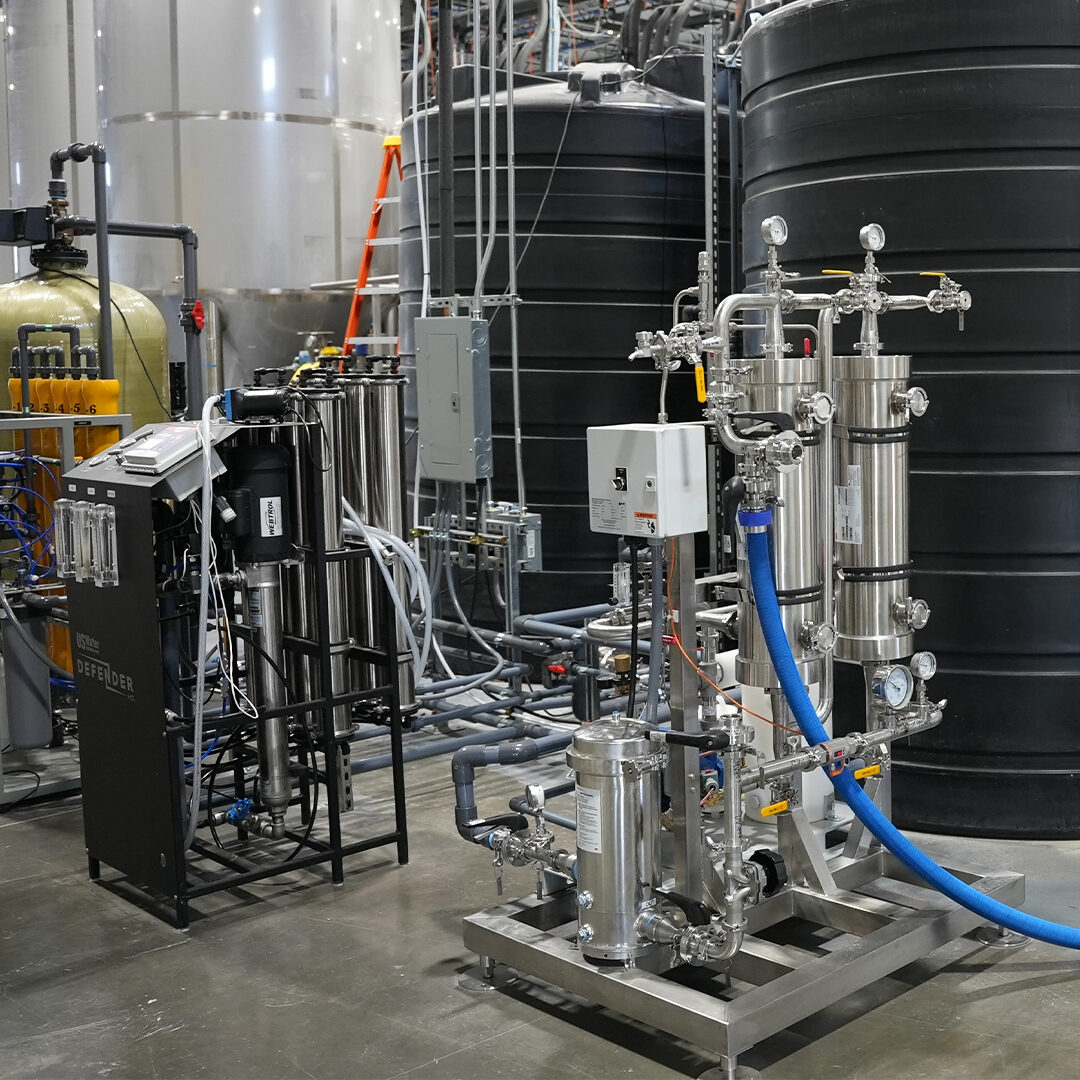
Turn-Key Deaeration Skids

A deaeration skid is a crucial component used in liquid processing industries to remove dissolved gases such as oxygen and carbon dioxide from liquids, particularly water or other fluids used in industrial processes. With reduced gas levels, liquid processors can expect improved product stability, minimized corrosion, and enhanced efficiency in various applications, making deaeration skids indispensable assets for optimizing liquid processing operations. Contact us to learn more and discover how our cutting-edge deaeration skids can revolutionize your liquid processing operation.

Features
  • Microporous hollow fiber membrane in hydrodynamically optimized contactor designs that enable rapid and efficient gas transfer performance
  • Compact, in-line operation with low pressure drop. May help save space, improve productivity, and decrease the number of required pumps
  • Broad product portfolio with wide range of flow capacities to meet multiple scales of operation
  • Includes membrane contactors designed to handle high liquid pressures – up to 300 psi (20 bar) pressure – and hot water sanitization
  • Capable of achieving very low dissolved gas levels down to 1 ppb O2 at outlet with proper system design
  • Membrane contactors operate without using chemicals, which could help reduce chemical use in some plant operations requiring dissolved gas control
REQUEST A QUOTE
  • Deoxygenating boiler feed water
  • Deoxygenation of beverage product water to help protect product from oxidation and may extend shelf life
  • O2 removal in ultra-pure water processes to help improve yields and water quality
  • Degassing point of use rinsing water and other compatible process solutions in wet bench processes
REQUEST A QUOTE
  • AISI 304 stainless steel, TIG weld construction
  • 304 and 316 stainless options
  • Custom sizes and orientations to meet customer needs
  • Polypropylene membrane
  • UL listed, 508A control panels
REQUEST A QUOTE
  1. How do you clean a deaeration system if you run beer or other beverages through it?

    • The system can be cleaned using standard caustic and acid CIP (clean-in-place) procedures commonly used in beverage processing.

    • To maintain performance and protect the membrane contactor, detergents and low surface tension cleaning agents should be avoided.

    • A detailed cleaning guide is available upon request to ensure proper procedures and long service life.

  2. What CO₂ or nitrogen feed gas purity is needed for a deaeration system?

    • Gas purity directly impacts the achievable dissolved oxygen (DO) level.

    • For example, using 99.9% purity gas typically limits performance to around <50 ppb DO. Higher purity gas enables lower DO levels.

    • If your gas supply is below standard purity levels, we can help evaluate expected performance and optimize your setup.

  3. What is the lifespan of the membrane contactor in a deaeration system? How do you know when it needs service?

    • The membrane contactor typically lasts 3–5 years in most applications.

      Actual lifespan depends on factors such as:

      • Cleaning frequency
      • Adherence to recommended cleaning procedures
      • Overall operating conditions

      Performance can be monitored over time—a gradual decline in DO removal efficiency is the primary indicator that service or replacement may be needed.

  4. What flow rate is required to achieve single-digit ppb dissolved oxygen in a deaeration system?

    • Achieving single-digit ppb dissolved oxygen (DO) with a single membrane contactor depends heavily on water temperature.

    • At 20°C (68°F), reaching single-digit ppb is generally not achievable with a single contactor. However, at elevated temperatures—around 40°C (104°F)—it is possible to achieve <10 ppb at approximately 15 GPM using an 8×20 contactor.

    • This highlights an important point: temperature plays a critical role in DO removal performance, not just flow rate. Higher temperatures improve oxygen removal efficiency, allowing for lower DO levels at practical flow rates.

REQUEST A QUOTE

Turn-Key Deaeration Skids

A deaeration skid is a crucial component used in liquid processing industries to remove dissolved gases such as oxygen and carbon dioxide from liquids, particularly water or other fluids used in industrial processes. With reduced gas levels, liquid processors can expect improved product stability, minimized corrosion, and enhanced efficiency in various applications, making deaeration skids indispensable assets for optimizing liquid processing operations. Contact us to learn more and discover how our cutting-edge deaeration skids can revolutionize your liquid processing operation.

Features & Options

Our equipment features are usually sold as add-ons by most manufacturers, sparing you the inconvenience and unexpected expenses of acquiring additional equipment, or services.

Auxiliary Equipment

Look to Deutsche to handle the entire scope of your project from utilities, sanitary piping, bulk storage, milling, CIP, conveyance, filtration, and custom equipment. Our dedicated manufacturing team and component partners provide the latest technology and most reliable ancillary equipment catered to your process.

Service & Support

Each project is assigned a dedicated engineer, ensuring personalized attention and expertise for your design, installation, control integration, programming, process piping, and field service needs. We’re also here to provide continuous equipment support and assist with system process inquiries.

Cleaning

We prioritize seamless CIP integration in all our equipment designs. Furthermore, we offer industry-leading CIP skids, carts, and steam sanitation options. Recognizing the importance of proper system sanitation to your bottom line and product quality, we’re committed to delivering custom-engineered cleaning processes, equipment, and solutions.

Automation

Customizable automation is the key to bringing higher quality, consistency, yields, and efficiencies to your system – no matter your industry or application. Choose to add specific instruments for insight into your process, add automated features to reduce dependence on labor or choose to fully automate your system for the ultimate hands-off experience.

Deutsche Beverage + Process Dissolved Oxygen Removal Systems

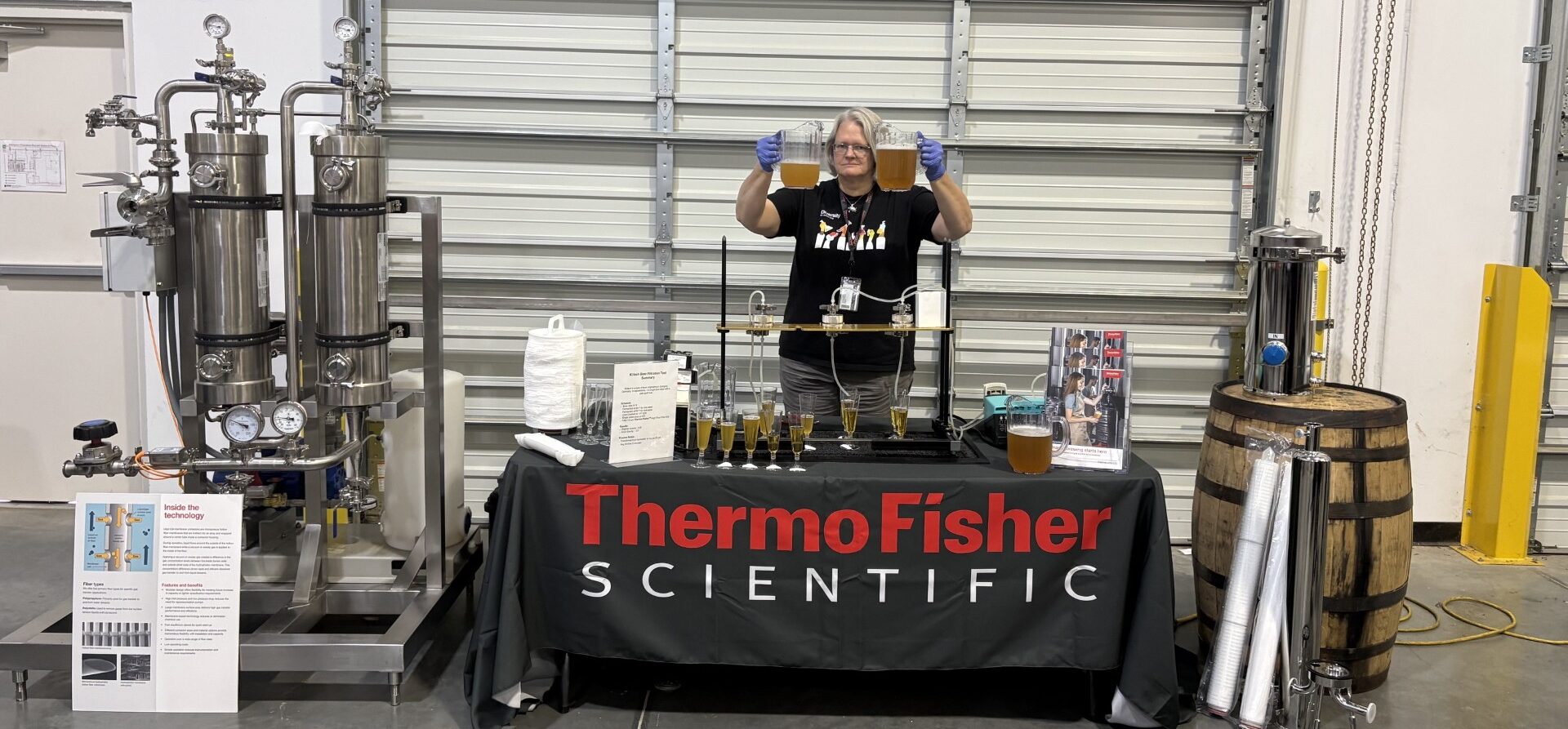
We have partnered with 3M™ filtration systems to create complete deaeration skids, ensuring you a turn-key system with proven filtration and precise engineering.

About 3M™ Liqui-Cel™ Membrane Contactors
3M™ Liqui-Cel™ Membrane Contactors provide efficient dissolved gas control in a compact design. Capable of adding gases to or removing dissolved gases from compatible liquid streams, these gas transfer devices utilize hollow fiber membrane technology that may help facilities around the world improve operating efficiency, performance and protect product quality.

The presence of dissolved gases, such as oxygen, carbon dioxide, nitrogen and other non-condensable gases can cause a number of difficulties. Process interruptions, yield loss, corrosion, surface defects, unreliable measurement readings, poor product quality, higher operating costs and equipment inefficiency are a few examples of challenges faced by various industries when dissolved gases and air bubbles are not consistently controlled.

The 3M™ Liqui-Cel™ Membrane Contactor product offering includes products made with various materials of construction and a wide-range of flow capacities to meet process and application requirements. Their modular nature makes them easy to incorporate into systems with lower weight and less space than other conventional technologies, such as vacuum towers or forced draft deaerators. 3M™ Liqui-Cel™ Membrane Contactors do not require chemicals in operation and can be an effective alternative to chemical treatment options, such as oxygen scavengers in boiler feedwater or caustic/acid in reverse osmosis (RO) and other deionization systems. This may be particularly advantageous for facilities that want to reduce on-site chemical use as part of their sustainability goals.

How 3M™ Liqui-Cel™ Membrane Contactors Membrane Contactors Work
3M™ Liqui-Cel™ Membrane Contactors utilize microporous or non-porous, semi permeable hollow fiber membrane that is placed inside a contactor housing. In our EXF and EXT contactors, liquid flows around the outside of the hollow fiber membrane while a vacuum and/or sweep gas is applied to the inside of the hollow fiber during operation. In our other MM series membrane contactors liquid and gas flows are opposite: liquid flows inside of the hollow fiber membrane while a vacuum and/or sweep gas is applied to the outside of the hollow fiber.

Applying a vacuum or sweep gas creates a difference in the gas concentration levels between the inside (lumenside) and outside (shellside) of the hollow fiber membrane. This concentration difference is what drives rapid and efficient dissolved gas transfer.


IN THE NEWS

Live from the Craft Brewers Conference 2026: Industry Trends & Innovations

Our initial impressions straight from the show! Filmed live at the Craft Brewers Conference (CBC), Philadelphia 2026, before the show floor opened on Day 2, this conversation captures early insights of the brewing industry's event of the year. We cover the key trends shaping breweries and distilleries today, from automation and efficiency to expansion into RTDs and spirits, and how operators are evolving to stay competitive.

RTD Beverage Deaeration: How to Control Oxygen and Improve Shelf Life

Steam is one of the most powerful utilities in your facility — but when condensate isn’t managed correctly, it can quietly damage piping, traps, and critical process equipment. This article breaks down what causes water hammer, how steam systems truly behave, and what to watch for before small issues turn into costly downtime.

5 Ways to Separate Great Welds from “OK” in Sanitary Piping

Steam is one of the most powerful utilities in your facility — but when condensate isn’t managed correctly, it can quietly damage piping, traps, and critical process equipment. This article breaks down what causes water hammer, how steam systems truly behave, and what to watch for before small issues turn into costly downtime.